Showing posts with label Shields. Show all posts

Monday, February 1, 2016

B4 - Group B - SHIELDS

Danielle Schroeder and I plan to research the viability of autonomous homes, where we define autonomous homes as being almost or completely self-sufficient. These can be sustainable and utile features that would make a living environment almost Star Trek-esque, from lights going off as one exits a room, automatic doors, etc., to sustainable features that help the house maintain a “net-zero” status. There is no gas supply, so energy is generated internally either by geothermal, solar, or wind energy; collected rainwater is collected and used; and waste can be recycled or disposed of internally. In our investigation we will further define autonomous homes and provide an overview of current and future technologies.  We’ll then look into what technologies are currently on the market, reasons for why they are not in widespread use, and list incentives to look towards autonomous living environments for homeowners/businesses. This study will be pertinent to the objectives of AE 510 in that it will introduce us to more revolutionary areas of intelligent and green infrastructure that have not yet been expanded upon in class.  


As mentioned during class discussion, the civil engineering industry is behind in terms of transformative technology; now with the advent of autonomous vehicles (Google cars), we think that self-sustaining houses are what’s coming up next and what we will be living in in the near future. The main inspiration for this investigation were from entries we have seen at the Solar Decathlon, and we are interested in partaking in the international competition for our senior design project next year.


A couple other things we plan to include in our report (perhaps in a chart): comparing features and their costs, assessing their feasibility, what tax exemptions are available as incentives for homeowners to invest in this technology, etc. In addition to the economic and environmental benefits that autonomous living brings, we will explore how else it can be of use. In prior blog posts the class has discussed having robots assist the elderly/disabled in retirement homes; for our study we will explore how an autonomous home can allow people to live their lives with limited human assistance, as well as any other potential uses.


Sources we used for our outline:
[3] http://www.solardecathlon.gov/

Comments:
Qallaf
Whitesell

Tuesday, January 26, 2016

B3 - Group B - Yasmina Shields

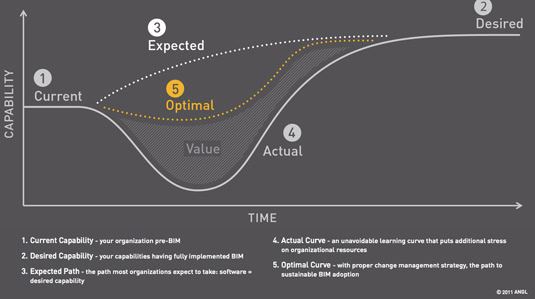
BIM is a revolutionary change in the way a project design is prepared and implemented, offering a number of benefits such as coordination, clash detection, cost estimating, etc. (as discussed in class/blog posts during the term). This all is meant to increase productivity/efficiency, reduce life cycle costs, and raise infrastructure value. BIM has a few drawbacks that are preventing its widespread and efficient use across the construction industry, ranging from training needed to learn the software, high initial investment costs, to legal issues. More often it is the organizational change, not the technology itself, which hinders BIM’s potential to streamline costs and processes. Executive leadership is crucial in order to create the right incentives and organizational structure for it to work, rather than offering mere support and expecting middle management to be the driving force for adopting BIM. The learning curve involved with BIM is another of the main issues that comes with the software; however I believe this to be a short-term problem that can be solved with practice and training (J-Curve shown below, illustrating the learning curve most organizations take when implementing BIM) [1].

Legal issues regarding BIM use stem off into a few branches: ownership, control, licensure matters, and more. BIM lacks established standards for determining who is responsible when an issue arises with a product when multiple parties have contributed information to it. Tracking the the source of the issue is and when it had occurred can be difficult as well.  Also, most states require that the professional practices in the AEC industry be under the responsibility of a licensed architect or engineer. While this is easily understood in 2D models and plans, compliance problems arise when an unlicensed individual enters data into the 3D BIM model, as well as determining the responsibility of keeping track of automatic changes the software makes accordingly. Many of the legal risks/issues associated with BIM can be resolved or limited by drawing up BIM-specific contractual agreements; this involves identifying potential issues, discussion and negotiation. This contractual protection can fairly balance the benefits and risks associated with using the software among multiple parties [2].


Tuesday, January 19, 2016

B2 - Group B - Yasmina Shields

Eastman’s Chapter “Interoperability” (BIM Handbook) discusses the importance of the technological issues of interoperability that architects, contractors, engineers and fabricators will face, which has previously been a topic concerned mainly by computer/software engineers. Interoperability can be simply described as being the facilitation of data transfer or exchange between two different programs. The National Institute of Standards and Technology (NIST) defines it as “the ability to manage and communicate electronic product and project data between collaborating firms’ and within individual companies’ design, construction, maintenance, and business process systems,” (Aranda-Mena & Wakefield). As engineering students at Drexel, most of us have seen this on a simpler scale during the Evaluation and Presentation of Experimental Data course sequence, where we were required to pull data from an excel file and analyze it using Matlab. Interoperability within BIM is one of the major challenges in that field, as it is beginning to evolve into an interface for information exchanges among different parties involved on a single project—thus creating issues of proper data transfer.

Dr. Guillermo Aranda-Mena and Prof. Ron Wakefield’s journal article for RMIT University explores the concept of interoperability and if we can afford to ignore it. According to the NIST report that they cited, in the United States the cost of omitting interoperability is estimated at $15.8 billion.  Factors in this approximation of ignoring interoperability among software systems included CAD software, project programming, and scheduling tools.  One thing I found interesting was the question they bring up is who exactly should drive the progress of interoperability. Is it the client’s responsibility in order to reduce cost?  One of the main keys to production improvement in construction relies heavily on efficiently managing information, so the contractors and engineers both have incentives to work more efficiently as well.  

For interoperability to work, there is a need for standards to be set in place, such as having a common language for softwares/systems to communication with each other. Currently the Industry Foundation Classes (IFCs) and the Standard for the Exchange of Product model data (STEP-ISO) are in use in the property and construction sectors. Benefits of IFCs include automatic compilation of bills of material in a digital form (ultimately increasing savings by reducing time and errors), climate and energy simulation of all the spaces (also saves time, helps find better solutions for energy saving) and also results in fewer coordination errors.  

References:
    http://search.proquest.com/assets/r20161.1.0-4/core/spacer.gif
  • Aranda-Mena, Guillermo & Wakefield, Ron. “Interoperability of Building Information: Myth or Reality?” RMIT University, Melbourne, Australia.
  • Eastman, C. "Chapter 3: Interoperability." BIM Handbook: A Guide to Building Information Modeling for Owners, Managers, Engineers and Contractors. 
  • Steel, Jim; Drogemuller, Robin; Toth, Bianca. Software and Systems Modeling.” (Feb 2012).
Comments:
Mark Lodato
William Whitesell


Monday, January 11, 2016

B1 - Group B - Yasmina Shields

Building information modeling (BIM) technology in the construction industry offers a number of benefits to facilitate the design and construction process. Some of its applications include 3D renderings, incorporating fabrication and shop drawings into the model, code reviews, cost estimating, construction sequencing, forensic analysis, and facilities management (yielding the BIM model still useful after construction is complete). Also by simulating a virtual model of a building, BIM software can also be used to run a clash analysis between mechanical and structural systems—which helps to avoid construction issues, in turn reducing unforeseen costs (savings of about 10% of the contract value have been made through clash detections, according to Azhar’s “Building Information Modeling (BIM): Trends, Benefits, Risks, and Challenges for the AEC Industry”).

In high school I was told that BIM was the technology of the future, next “big thing,” while interning at an architecture firm. Five years later while on co-op for a general contractor, I found that most of my coworkers had not even heard of it; a few were talking of incorporating it in future projects, but it did not seem to be gaining much ground. The technology is readily available, yet there still exists managerial and technical concerns. The main challenges that are hindering widespread use of BIM is that no standardized process nor defined guidelines for BIM use exists, and ways to reduce the learning curve of BIM trainees need to be considered.

As a fundamental building material in construction and the most used substance on earth (other than water), concrete is a large emitter of CO2, with about a ton of CO2 being released for every ton of cement produced. Dr. Behrokh Khoshnevis of USC has developed Contour Crafting system, which works like a conventional 3-D printer—building up layer by layer—but instead uses a fast-drying concrete mix. The concrete material is precisely extruded with near-zero waste, needing less concrete and reducing its negative environmental impact. This is similar to the 3-D printed buildings that companies such as WinSun are developing, as mentioned in blog posts by Danielle Schroeder and others. Contour Crafting is also an automated process, making construction less labor intensive and safer. Another added benefit is that complex formwork is no longer needed using this technology in order to make non-rectilinear walls.


Source: http://www.sculpteo.com/blog/2015/10/07/3d-printing-construction/

I have a particular interest in sustainable structures, and thought it worth mentioning Team Orange County’s entry in last year’s Solar Decathlon in this post. Their net-zero-energy, under 1,000 square feet house is mechanically managed by a radiant heating and cooling system along with a rooftop solar panel capture system, and collects storm water for garden use. They also included in their entry a personal 3-D printer and thermoplastic recycling system that allows the user to break down printed objects that are no longer needed around the house, and reuse the material to produce new household tools or parts for home repairs.


Comments to other students:


Tuesday, January 5, 2016

Group B Discussion Post - Week 1

After watching the videos, we can see 3 main changes. The first is an increase in speed in the drone's movement, and a more fluid travel throughout it's path. The second was a better coordination between the drones, as often times, both drones were working to create the same section, and interacting with one another to create sections. Thirdly, the drones had the ability to work in a changing environment; unlike the first, where the structure is more stable, the drones were able to work with a swaying rope which did not always have a defined position.

These tools may be applied in the future in more unknown or unsafe environments, where human interaction is more difficult. The increase in speed makes the use of drones more applicable than before.

Intro: Yasmina Shields

Hello all! I’m a junior BS/MS in Civil Engineering with a structural concentration. I’m involved in Drexel’s Hyperloop team and am an ASCE officer.  I hope to gain a more thorough understanding of Intelligent Buildings and learn how to apply that knowledge towards my career aspirations as a structural engineer. My current understanding of intelligent buildings are that they are designed using BIM software and require minimal physical labor to construct using remote assembly. 

Thursday, December 31, 2015